


1 min read
SHARE:
Publication in Yaz Magazine
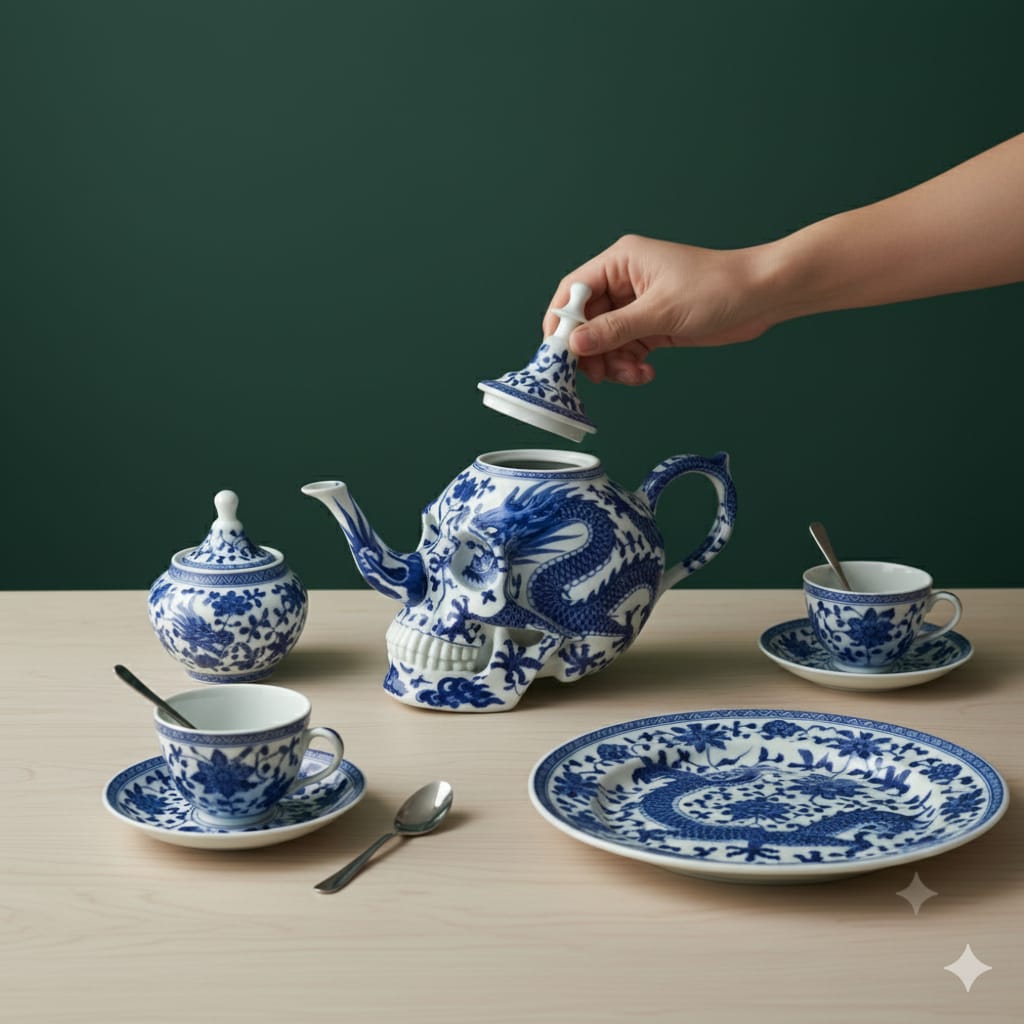
Memento Mori is a project that begins with a simple, everyday object — the teapot — to question time, use, and memory. The title has nothing decorative about it. It engages an explicit philosophical reference: “remember that you will die.” Not as a morbid sentence, but as a reminder of a finitude that gives meaning to use. Every object ages, wears, breaks. This fragility is not a flaw. It is the condition of any true relationship between the object and the one who uses it.
Yaz Magazine, an international reference publication in design and architecture, dedicates an article to this project. This recognition does not amount to simple media exposure. It signals something more decisive: the capacity of a conceptual approach to be read, understood, and situated within a broader debate about what contemporary design can be.
The Material Constraint: What Porcelain Imposes
This piece was made in porcelain — a material that does not forgive. Its density, its sensitivity to firing, its behavior under thermal shock: all of these impose formal decisions that cannot be made freely. The spout, the handle, the junction between the body and the lid — each element is the result of a negotiation between intent and material constraint.
This is precisely what interests me: designing in a material that resists, that has its own rules, that cannot be bent to pure formal will. The resulting object carries this tension. It is not simply made. It is resolved.
The Philosophical Dimension: Use as a Relationship with Time
A teapot is used every day, at the same time, in the same gesture. This repetition is not monotony. It is a ritual — in the functional sense: a structured action that organizes the relationship to time and the other. Designing a teapot is not simply solving a technical problem. It is proposing a form of presence in daily life.
Memento Mori poses this question explicitly: what does it mean to design an object knowing it will wear out? That its glaze will crack, its handle will chip, its lid will eventually break? The answer is not to design indestructible objects. It is to design objects that age well — that carry their wear as a story, not as a defect.
Published in Yaz Magazine, international design and architecture publication.
Related Posts


NEWSLETTER SUBSCRIBE
Stay ahead with our web updates
Avalanche powers a global community of builders creating real use cases for real impact.