


2 min read
Design Before Manufacturing — Industrial Sovereignty Begins in the Design Office
READ POST
SHARE:
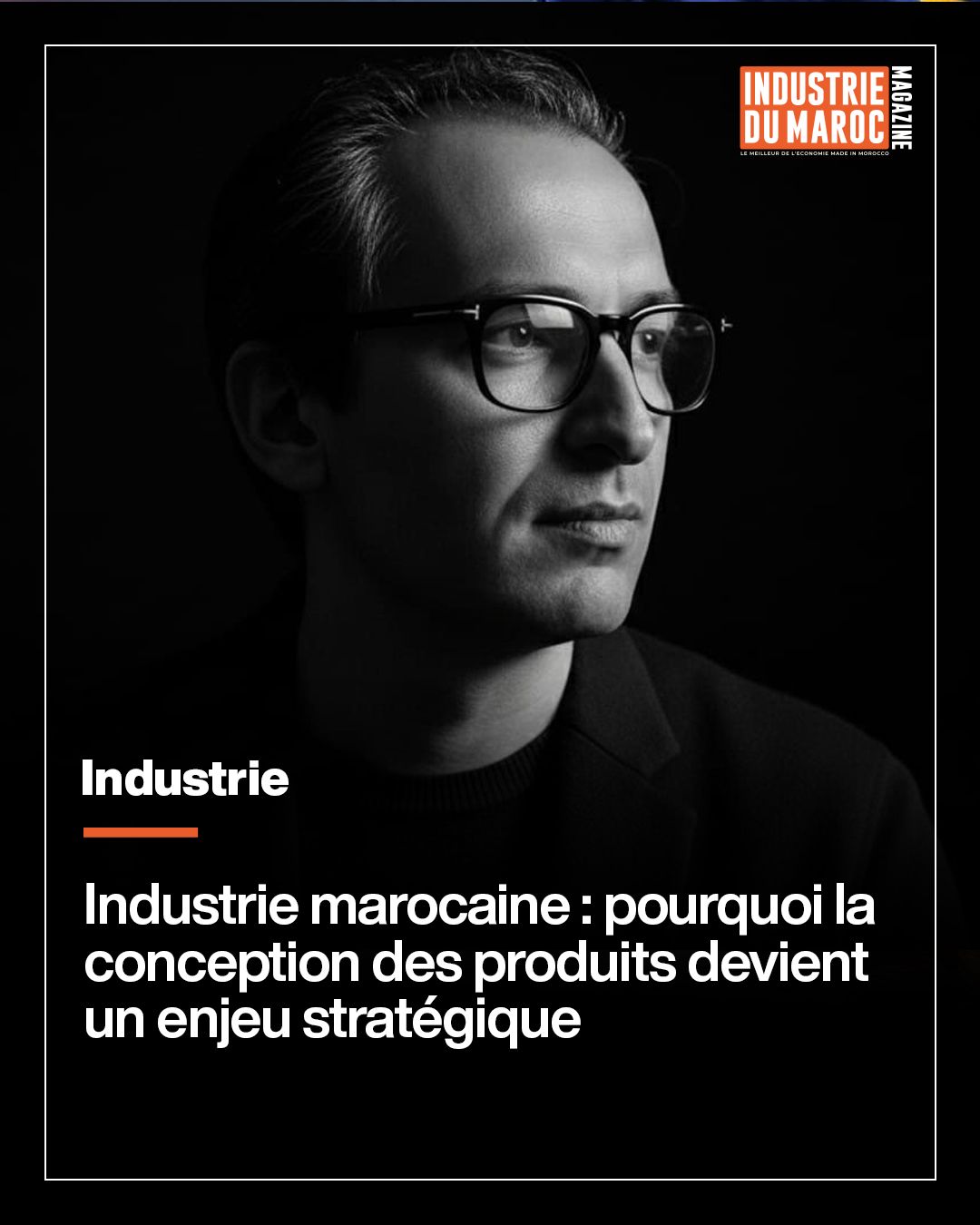
Industrial sovereignty begins in the design office
About my analysis published in Industrie du Maroc Magazine, March 2026
I. From Performance to Silent Dependency
In less than a decade, Moroccan industry has achieved a genuine productive transformation. The rise of automotive and aeronautics platforms, the growing integration into international value chains, and the progression of manufacturing added value — these achievements are documented and undeniable.
But a structural tension remains, less visible because less spectacular. Morocco now masters industrial processes. It produces according to plans defined elsewhere. Product specifications, technical architecture choices, design decisions — the essence of what determines an object’s value before it even enters manufacturing — are still predominantly developed abroad.
This is not a competency deficit. It is a position in the value chain. And it is precisely this position that needs to shift.
II. What Industrial Design Is — and What It Is Not
Industrial design is often misunderstood, even in industrial circles. It is associated with a product’s aesthetic, its visual finish, its color. This confusion carries a cost: it relegates design to the end of the production process, when the essential decisions have already been made.
Industrial design is a structural competency. It is exercised upstream. It determines the architecture of a product, its manufacturability, its cost of use, its market positioning. A well-designed product is not simply more beautiful. It is more efficient, more durable, easier to produce, more difficult to copy, and more capable of commanding a premium price in demanding markets.
Integrating this competency into Moroccan industrial companies is not a matter of aesthetics. It is a matter of competitiveness.
III. What My Practice Has Verified
My work as an industrial designer positions me at a precise intersection: between the formal rigor of manufacturability-oriented design and the demands of an international market that makes no concessions on perceived value. The German Design Award, obtained in one of the most demanding European environments for product design, and the title of Grand Master Craftsman awarded by the Moroccan Ministry of Craft, are not two parallel recognitions. They are two sides of the same conviction: that an object designed with rigor, from a territory that assumes its productive identity, can claim the world’s most selective markets.
What I have verified in my own practice, Moroccan industry can operate on a completely different scale.
IV. Industrial Sovereignty Is Built One Decision at a Time
The transition from subcontractor to designer-manufacturer is not simply a matter of investment. It requires building an internal design culture — training teams capable of formulating technical briefs, evaluating design proposals, and assuming the design choices of their products as a strategic responsibility. Morocco stops being merely an execution site and becomes an actor capable of proposing its own industrial solutions.
This choice is not only economic. It is cultural. It raises the question of whether a territory defines itself by what it produces or by what it designs — whether the intelligence of the gesture remains local or is perpetually imported with the plans.
Industrial sovereignty is not decreed in sectoral policies. It is built, decision by decision, in design offices. That is where upgrading begins — or stops.
This article is drawn from my analysis published in Industrie du Maroc Magazine, March 2026.
Related Posts

NEWSLETTER SUBSCRIBE
Stay ahead with our web updates
Avalanche powers a global community of builders creating real use cases for real impact.