


1 min read
SHARE:
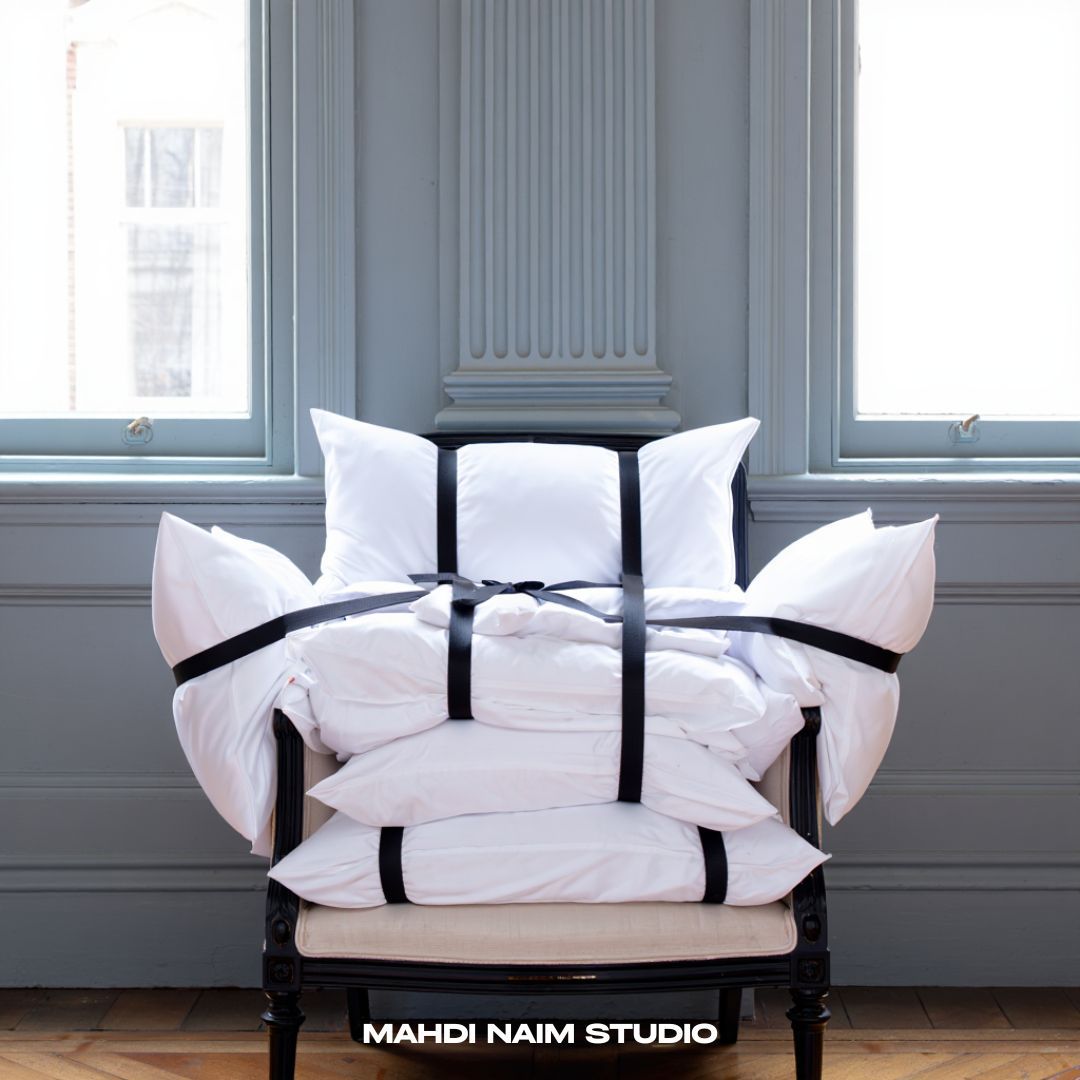
Seat Design — Mahdi Naim Studio
An armchair is not judged by its appearance. It is judged at 5:30 PM, when the body starts to speak. When the seat holds, supports, accompanies. Or does not.
This temporality is not arbitrary. At 5:30 PM, after seven hours of work, the body has gone through several cycles of tension and release. The lumbar muscles are tired. The pelvis seeks stable support points. The spine demands precise support. An armchair that seemed comfortable at 9 AM reveals its structural flaws at 5:30 PM.
Too much furniture is “beautiful” at three meters and unusable after twenty minutes. Too many seats sag or fatigue because the essential has been sacrificed: the structure. The showroom lies. It shows new objects, photographed under optimal lighting, never sat in for more than five minutes. The real body, however, spends hours. It sweats, moves, sags, seeks multiple positions. Comfort is measured over time, not in photographs.
Comfort Is a Technical Problem
Comfort is not a subjective feeling. It is the result of a set of measurable, optimizable technical decisions: seat height relative to the floor, seat depth relative to thigh length, backrest angle relative to seat angle, lumbar support position relative to the natural curve of the spine, armrest height relative to elbow position. These parameters are documented. They have optimal ranges validated by ergonomics research. Not designing within these ranges is a choice that must be assumed consciously.
This does not mean all furniture must be ergonomically standardized. It means that every departure from ergonomic standards is a formal decision that must be justified — not by aesthetics, but by the understanding of how and by whom the object will be used.
Structure Before Form
The approach we practice at Mahdi Naim Studio starts with structure. Before choosing materials, before deciding on aesthetics, before drawing a curve: what structure will allow this seat to support a body in multiple positions, over a long duration, without fatigue and without sagging?
This structural priority is not aesthetic reductionism. It is intellectual honesty: acknowledging that a seat is first and foremost a functional object — and that its formal quality can only be fully appreciated if this function is performed well.
Mahdi Naim Studio — seat design where comfort is treated as an engineering discipline, not an aesthetic statement.
Related Posts

NEWSLETTER SUBSCRIBE
Stay ahead with our web updates
Avalanche powers a global community of builders creating real use cases for real impact.