


Sustainability
( Approach )
Designing for the full life cycle
A practice shaped as a sequence of gestures: extract less, transform better, and pass value on for longer. The studio starts from what is already there (matter, know-how, technology, heritage, constraint) and asks what each resource can still become before anything new is added.
( Principle )
“We do not draw finished objects. We orchestrate the lives they will have after us.”Mahdi Naïm
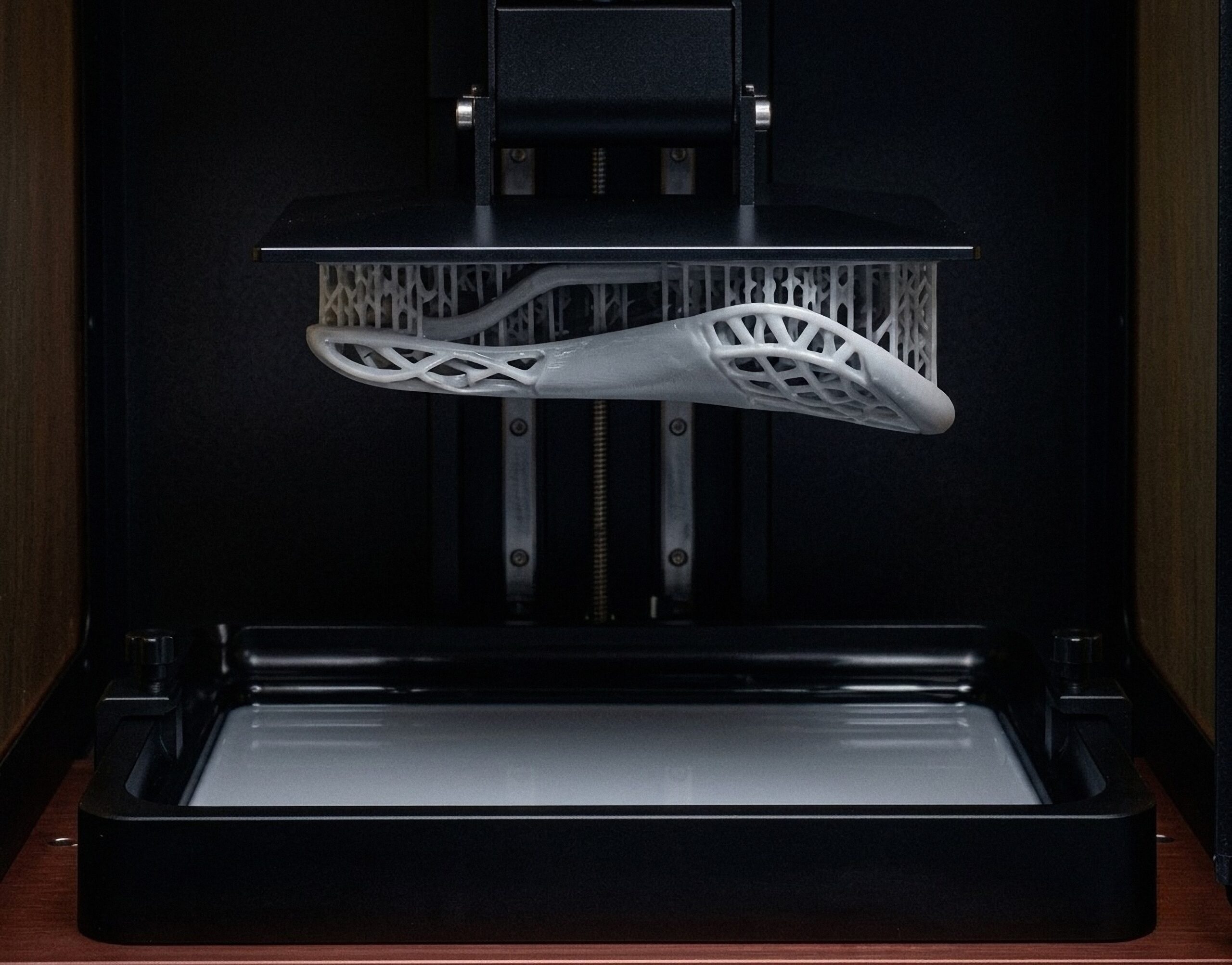 Fig. 01 — Additive fabrication
01 / Circular fabrication
Matter never disappears.
Additive manufacturing has been part of the studio’s work since 2012. By printing only the material a form needs, solid volumes give way to lattices that carry load where it is required and leave air everywhere else. Parts are produced on demand, close to where they are used, and designed so that a worn component can be reprinted and replaced instead of the whole object being discarded. The structure stays visible: whoever looks at the piece can read how it works, and therefore how it can be repaired.
01
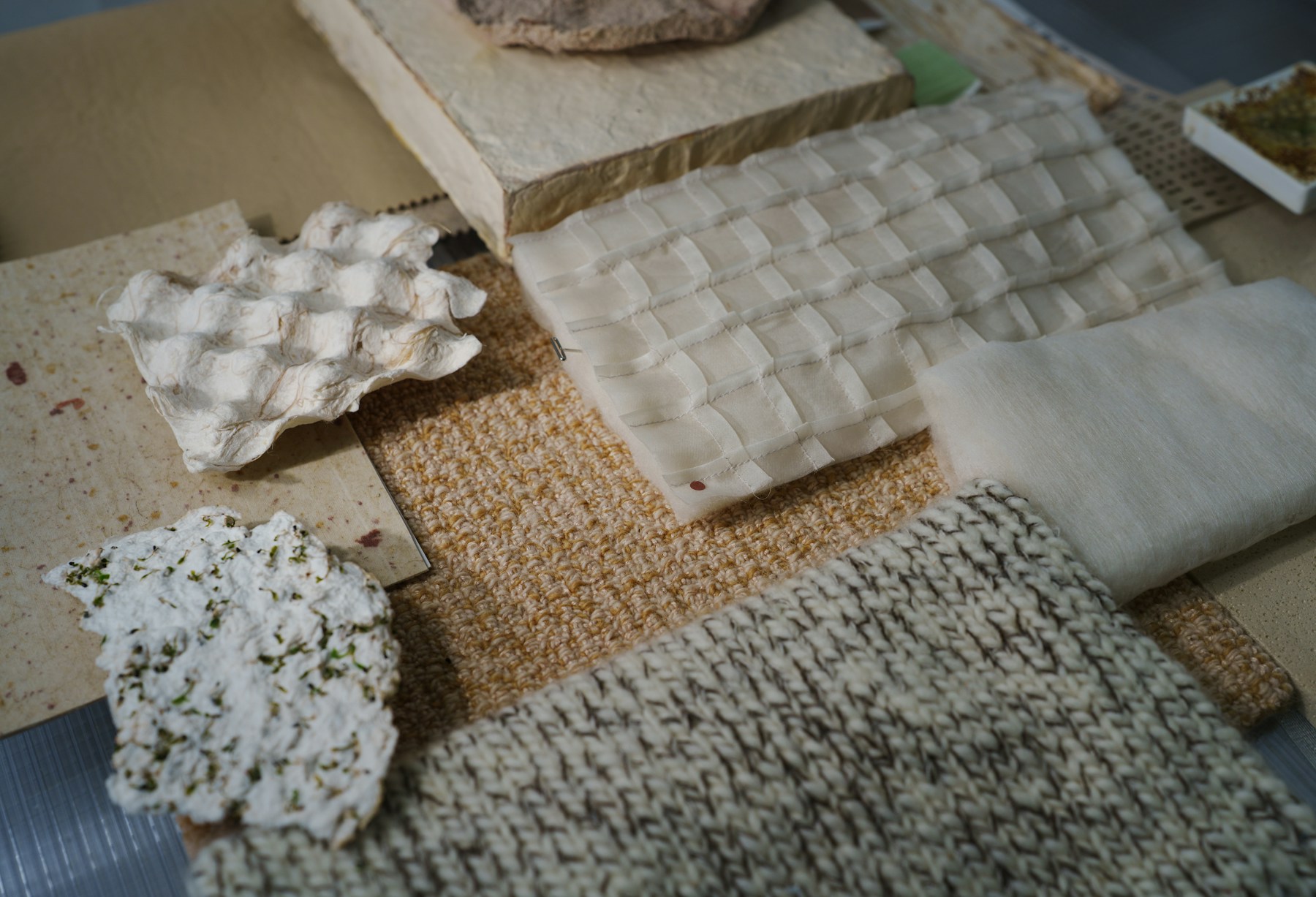 Fig. 02 — Material library
02 / Material in becoming
Resources, not waste.
Palettes are assembled from materials that can be reused, repaired or returned to another cycle: vegetable-tanned leather, earth, wood, natural fibres, bio-based polymers. Each choice is weighed against the whole life of the object: how it is made, how it ages, how it comes apart. Assemblies that cannot be separated are avoided, so that at the end of one use the parts can find a place in the next.
02
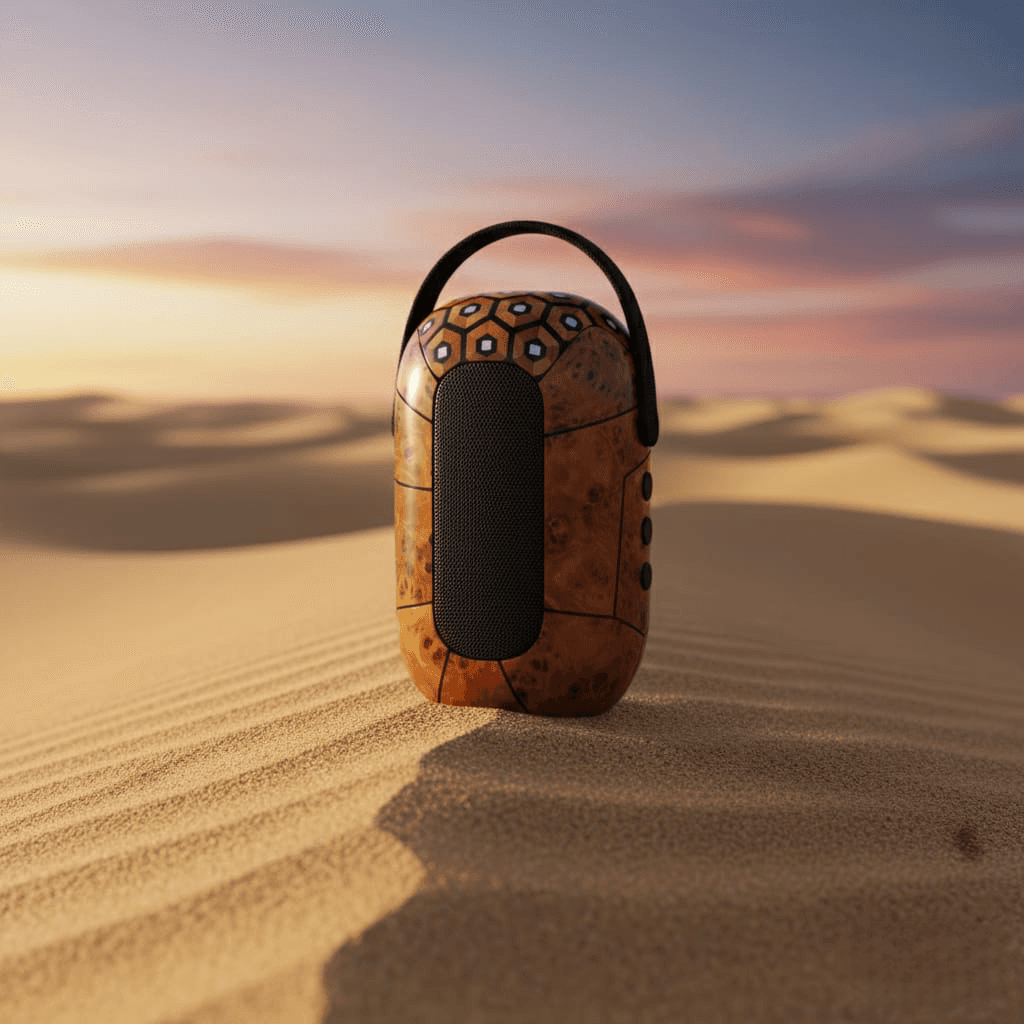 Fig. 03 — Essential tech
03 / Essential tech
Only what the mission requires.
The studio works with a principle it calls essential tech: use the technology a project needs to fulfil its purpose, and nothing that would leave traces around it. Intuition comes first, calculation follows. A solution reached through calculation alone solves one problem and often moves it elsewhere; a solution that takes its surroundings into account tends to settle into them.
03
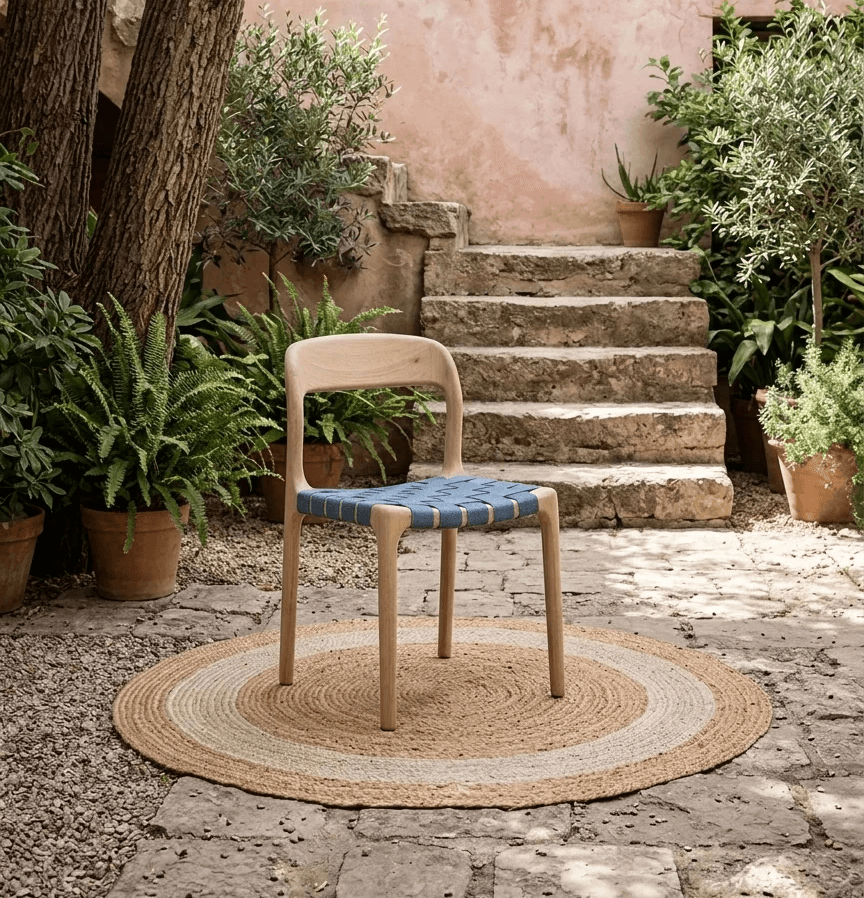 Fig. 04 — Made by hand
04 / Craft & territory
Knowledge that already exists.
Between France and Morocco, the studio works with a network of workshops and artisans whose knowledge is learned through the hands: a thickness judged with the fingers, a curve corrected by eye, years of trials and failures. Digital tools extend this knowledge rather than replace it. Producing locally shortens transport, keeps skills alive where they were formed, and gives territories a share in what is made from their resources.
04
05 / Sharing the method
Principles are only useful when they travel.
Alongside its projects, the studio passes these approaches on to designers, students and companies.
- 01Eco-design workshops at the Cité du Design, Saint-Étienne
- 02Workshops on desirable futures for the APCI, Lyon
- 03A workshop on biophilic design
- 04Teaching in schools of architecture and design in France and Morocco
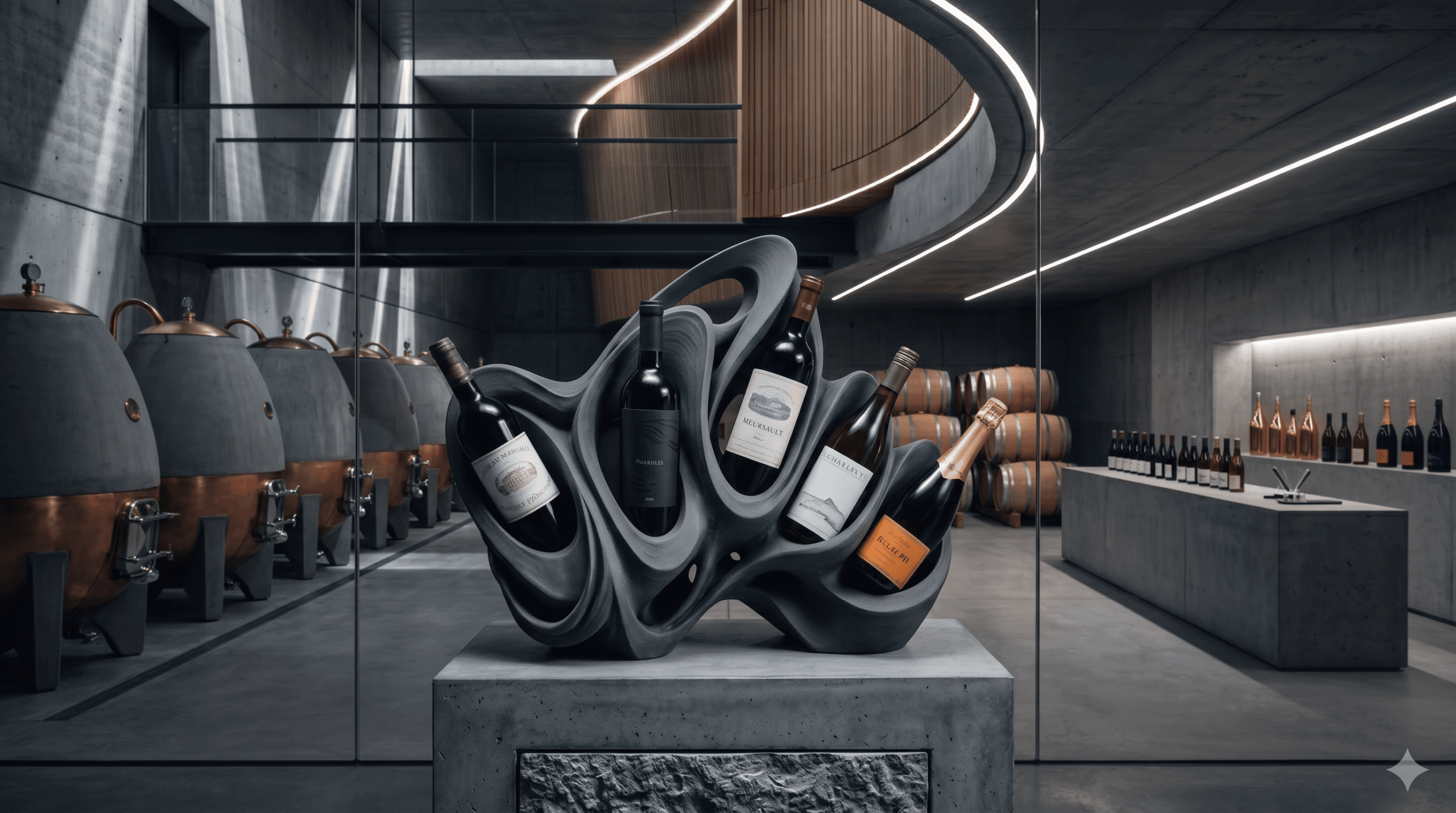 Fig. 05 — Printed object
( Designing possibilities )